
ABOUT US
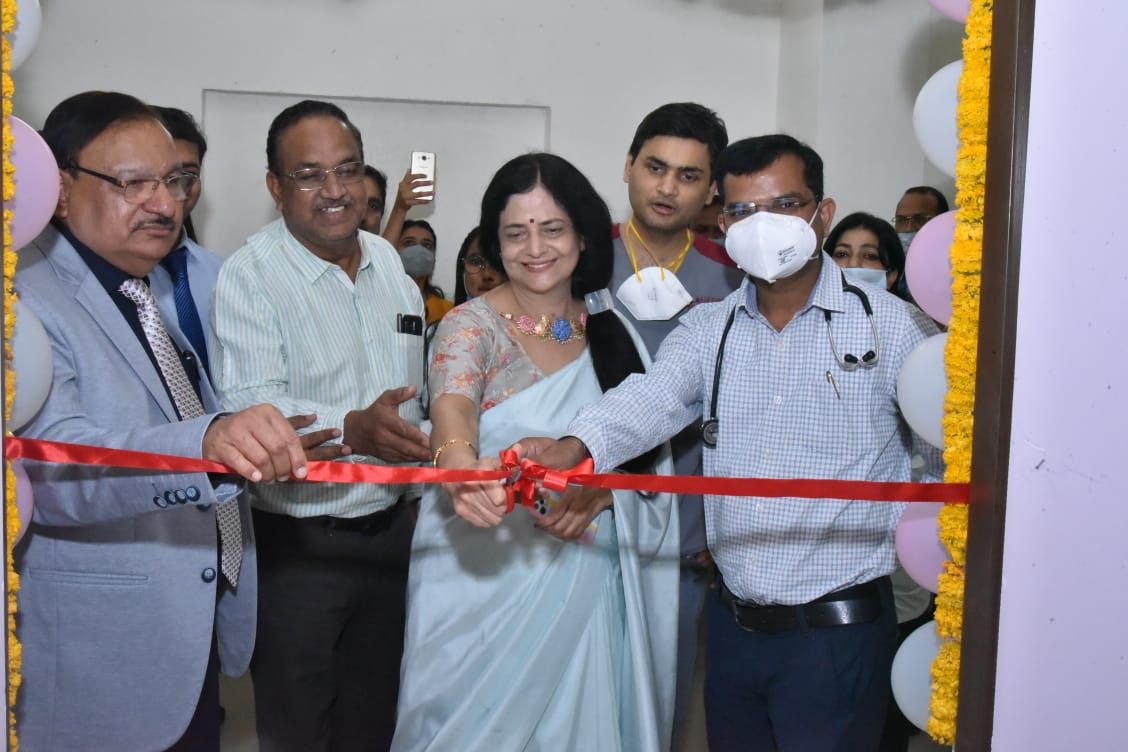
The Department of Palliative Medicine at Sri Aurobindo Medical College & PG Institute (SAIMS), Sri Aurobindo University, is dedicated to improving the quality of life of people living with serious, life-limiting and chronic illnesses. The department provides comprehensive, compassionate and evidence-based care, addressing physical, psychological, social and spiritual concerns of patients and their families. Services are available for people with advanced cancer, severe neurological illnesses, chronic kidney disease, advanced organ failure and other complex medical conditions. The department integrates clinical care with postgraduate education, research, professional training and community outreach.
Our Vision
To establish a centre of excellence in Palliative Medicine through compassionate patient care, academic excellence, research and equitable access to palliative care.
Our Philosophy
Palliative care is not limited to end-of-life care. It can be introduced early in the course of serious illness and provided alongside active medical treatment. Our commitment is to ensure dignity, comfort and quality of life for every patient, while supporting families throughout the journey of serious illness.
CLINICAL SERVICES
Outpatient Services (OPD)
Daily OPD for pain and symptom management, supportive care and follow-up.
Inpatient Services (IPD)
Dedicated 20-bedded unit for patients with complex symptoms and advanced cancer and non-cancer illnesses.
24-hour Emergency Services
Management of pain crises, breathlessness, delirium and other palliative care emergencies.
Pain Management
Specialist management of cancer-related, chronic and neuropathic pain, including complex pain conditions, with liaison with interventional pain services.
Psycho-oncology
Psychological assessment, counselling and emotional support for patients and families.
Caregiver Support
Structured caregiver education and hands-on training for home-based care.
CORE SERVICE AREAS
- Palliative oncology and early integration of palliative care
- Neuropalliative care
- Kidney supportive care and conservative kidney management
- Palliative care in advanced organ failure
- Psycho-oncology
- Complex pain and symptom management
- End-of-life care and bereavement support
- Caregiver empowerment
FACULTY & CONTACT
Dr Pankaj Singhai
Designation: Professor and Head
Qualification: MD (Palliative Medicine), Tata Memorial Hospital, Mumbai
Email: [email protected] | Contact: 9920828452
Dr Gauraiya Chinchalker
Designation: Assistant Professor
Qualification: MD (Palliative Medicine), Tata Memorial Hospital, Mumbai
Department: Department of Palliative Medicine
ACADEMIC PROGRAMMES
Programmes Offered
- MD Palliative Medicine
- One-year Fellowship in Palliative Medicine
- One-year Fellowship in Psycho-oncology for Clinical Psychologists
- Certificate courses in Palliative Care for doctors, nurses and allied healthcare professionals
- Clinical observerships, workshops and continuing medical education programmes
MD Palliative Medicine – Structured Training
The three-year MD programme follows a competency-based curriculum, comprising 24 months of core training in Palliative Medicine and 12 months of rotational training in other specialties. The programme emphasises interdisciplinary learning, bedside teaching, clinical skills, communication, research and evidence-based practice. Residents gain exposure to inpatient, outpatient, consultation-liaison and home-based palliative care.
Rotational Postings – 12 Months:
| S.No. | Specialty / Subspecialty | Duration |
| 1 | General Medicine, including Geriatrics | 3 months |
| 2 | Medical subspecialties (Gastroenterology, Neurology, Nephrology, Pulmonology, Cardiology and Endocrinology) | 3 months |
| 3 | Pediatrics | 1 month |
| 4 | Medical Oncology | 1 month |
| 5 | Radiation Oncology | 1 month |
| 6 | Surgical Oncology | 15 days |
| 7 | Radiology | 15 days |
| 8 | Public Health | 15 days |
| 9 | Rehabilitation Medicine | 15 days |
| 10 | Chronic Pain Medicine | 15 days |
| 11 | Psychiatry | 15 days |
ADVANCED PAIN MANAGEMENT SERVICES
The department provides specialised facilities for managing complex and refractory pain, including:
- CADD PCA pumps and patient-controlled analgesia
- Continuous ambulatory drug delivery systems
- Continuous intravenous and subcutaneous analgesic infusions
- Syringe driver-based medication delivery
- Multimodal analgesia and management of neuropathic pain
- Opioid titration, rotation and management of complex pain
- Interventional pain management, including MIPSI
The department facilitates access to essential opioid medications for moderate to severe pain and promotes their safe, rational and appropriate use in accordance with regulatory requirements.
RESEARCH & TRAINING
Research & Innovation
The department undertakes clinical, academic and implementation research to improve palliative care delivery, particularly in resource-limited settings:
- Nurse-led pain management and pain champion programmes
- Caregiver empowerment for home-based care
- Community-based palliative care models
- Conservative management of malignant bowel obstruction
- Kidney supportive care and conservative kidney management
- Neuropalliative care
- Technology and machine-learning applications in pain assessment
- Psychosocial care and quality of life
Postgraduate residents are encouraged to participate in clinical research, publications, audits and national and international academic activities.
Training & Capacity Building
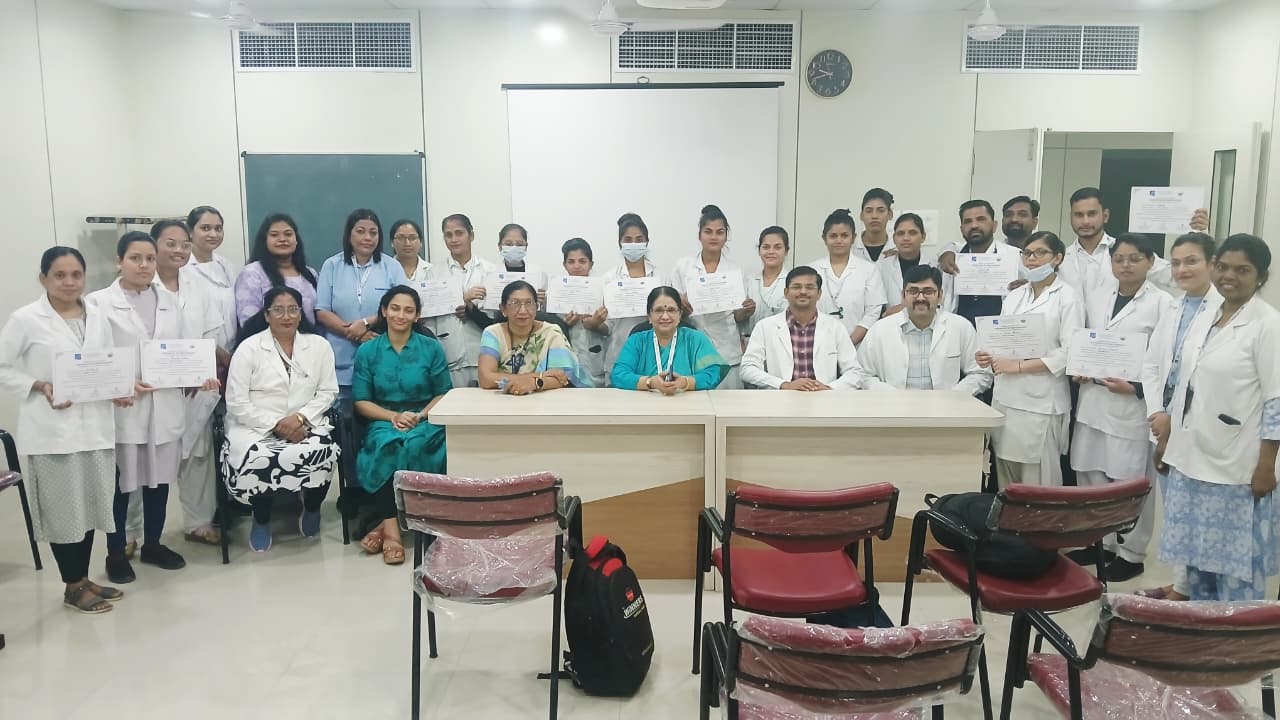
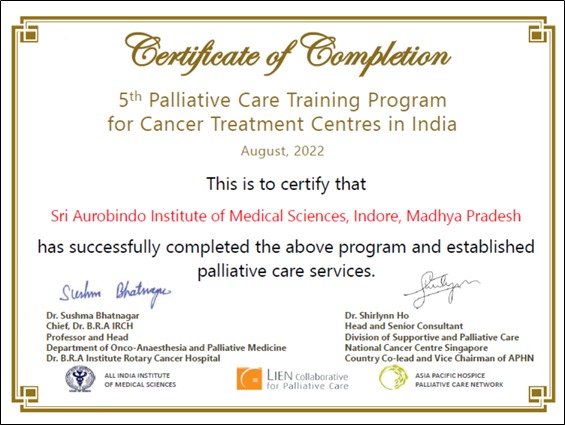
The department collaborates with national and international professional organisations to strengthen palliative care education and service delivery:
- Fellowship and certificate programmes
- Nurse-led pain management training
- Clinical observerships and hands-on training
- Caregiver empowerment programmes
- Workshops, CMEs and national-level training initiatives
- Interdisciplinary training in neuropalliative care and kidney supportive care
COMMUNITY OUTREACH & INFRASTRUCTURE
Community Outreach
The department works to extend palliative care beyond hospital boundaries through community-based initiatives, healthcare professional training, caregiver education and public awareness. Student volunteering initiatives encourage participation from healthcare and non-healthcare disciplines in supporting patients, families and older people.
Infrastructure & Campus Facilities
Sri Aurobindo University offers an academic and residential environment for postgraduate students on a 35-acre campus, with a 1,400-bedded teaching hospital:
- Academic facilities: Lecture theatres, demonstration rooms, seminar halls, central library and digital learning resources
- Residential facilities: Separate boys’ and girls’ hostels, postgraduate accommodation, study rooms, internet/computer facilities and common recreation areas
- Dining and recreation: Central mess and dining facilities, indoor and outdoor sports, gymnasium and recreational facilities
RECOGNITIONS & COLLABORATIONS
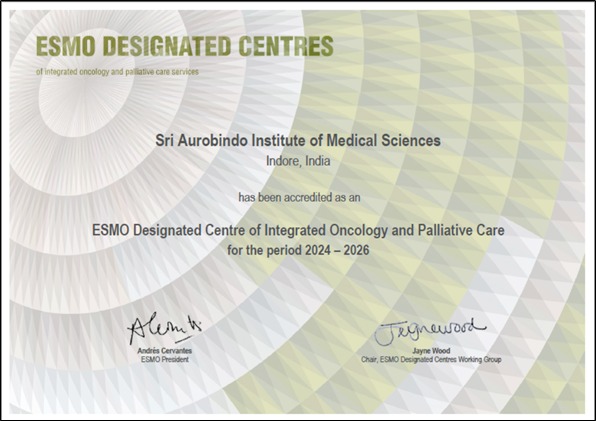
ESMO Designated Centre
For Integrated Oncology and Palliative Care (2024 – 2026)
Sri Aurobindo Institute of Medical Sciences has been accredited as an ESMO Designated Centre of Integrated Oncology and Palliative Care services for the period 2024 – 2026.
APHN Network
Asia Pacific Hospice Palliative Care Network initiatives
Lien Foundation
Grant support for development of pain management services
Collaborations
Collaborations with IAPC, Institute of Palliative Medicine and Pallium India
SRI AUROBINDO CANCER HOSPITAL
Sri Aurobindo Cancer Hospital at SAIMS provides multidisciplinary cancer care through specialised oncology services and collaboration with supporting clinical departments. The Department of Palliative Medicine works closely with oncology teams to support early integration of palliative care, complex pain and symptom management, psychosocial support and end-of-life care. This provides MD Palliative Medicine residents with exposure to the comprehensive management of cancer patients across the disease trajectory.
Specialised Oncology Services:
- Medical Oncology
- Surgical Oncology
- Radiation Oncology
- Orthopaedic Oncology
- Gynaecological Oncology
- Paediatric Haemato-oncology
- Haemato-oncology and Bone Marrow Transplantation
- Breast Oncology
- Nuclear Medicine
- Oncopathology
FUTURE SCOPE OF SPECIALIST PALLIATIVE MEDICINE
Palliative Medicine is an evolving speciality with opportunities in clinical practice, academics, research and healthcare leadership. Specialist physicians can contribute across:
- Cancer centres and integrated oncology services
- Multispecialty hospitals, including consultation-liaison, neuropalliative care, kidney supportive care and ICU palliative care
- Complex pain management and advanced analgesic interventions
- Hospice, home-based and community palliative care
- Medical education, postgraduate training and clinical/implementation research
- Public health programmes, advocacy and healthcare policy
An MD in Palliative Medicine offers a career combining clinical medicine, interdisciplinary teamwork, research, teaching and healthcare leadership.
Department Contact
- OPD: 0731 4231814
- IPD: 0731 4231566
 Virtual Tour